
Bring Them Back Home

Yasmina Ceric, Founder

Bring Them Back Home


When I think about home, I think about my children running through the hallway, the smell of food cooking in the kitchen, and the safety of a roof above us. But for millions of families, that sense of home no longer exists. For decades, they’ve lived under illegal occupation, oppression, and destruction. They have been cast out into the cold, where even the idea of home feels like a luxury.

I’ve met mothers who cry quietly at night because they can no longer give their children a safe place to sleep. I’ve seen children using rubble as playgrounds and heard their laughter echoing through destroyed streets. Their resilience is remarkable, but it should not be a necessity. These families deserve to come back to warmth, dignity, and the homes they’ve lost.
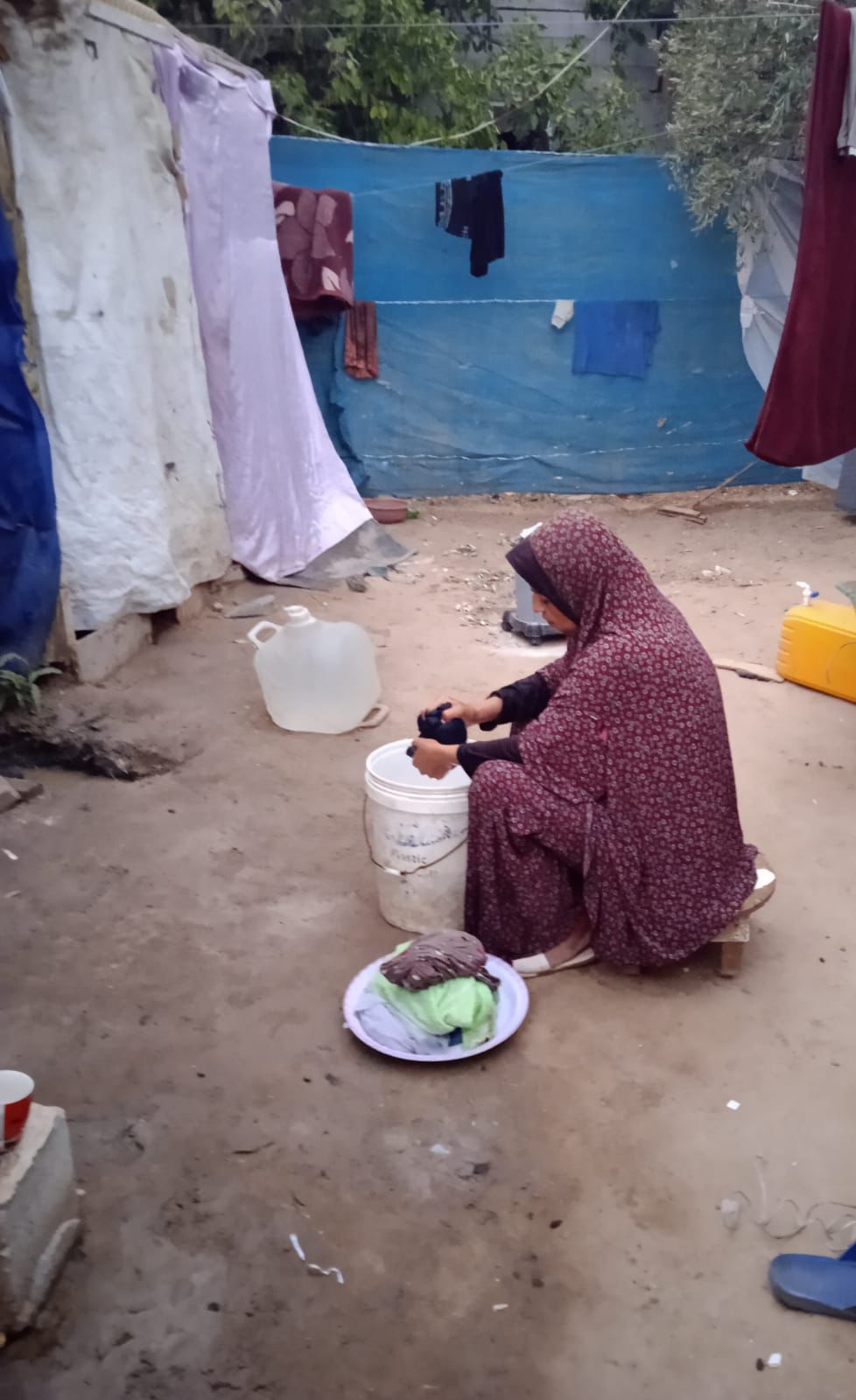
A family displaced by war

A family torn apart, longing for the warmth of home and safety.

The Silent Devastation of Parents


As a mother, I often think of the mothers and fathers in Gaza, Syria, and other occupied regions. Parents who see their children running off to play, only to hear explosions moments later. Parents who sit helplessly in charity hospitals, unable to afford treatment for their injured sons and daughters. The emotional storm they endure—grieving for their children while trying to create a sense of normalcy for those who survive—is unimaginable.

No parent should have to bury a child. No parent should have to fight daily to protect their children from the consequences of someone else’s hate. And yet, this is their reality—a storm of trauma, grief, and resilience. They endure for the sake of their children and for the hope of one day returning to a home that no longer exists.

What It Means to Be Out in the Cold


Being out in the cold isn’t just about the absence of shelter—it’s about the absence of security, of belonging, of dignity. I’ve met families who once had thriving lives—farmers, teachers, artists—reduced to holding signs at border crossings, begging for a second chance at life. They tell me, “We just want to go home.” But where is home when your house is rubble and your streets are unrecognizable?

For children, the cold isn’t just physical—it’s the isolation of being denied an education, the fear of not knowing where their next meal will come from, and the longing for a life where they can simply be kids again. The cold strips away their childhood and leaves them with scars they’ll carry for a lifetime. When I look into the eyes of these children, I see something that should shake the very foundation of our humanity. I see resilience where there should have been joy, survival where there should have been growth. These families have been stripped of the things we take for granted—the security of a roof, the certainty of a meal, the freedom to imagine a better tomorrow.

A family displaced by war

This child, one of thousands, innocent, wants to play, all she knows is truth to herself and kindness to others, an angel, and also a victim of illegal occupation and genocide. Her crime was to be born in the wrong place and to be labeled a Palestinian

Bring Them Back Home


These families deserve more than survival. They deserve to dream, to rebuild, and to know the warmth of home once again. Let’s make that happen—together.

Dreaming should be every child’s right, not a luxury. They dream of safety, education, and a home where their laughter echoes freely. Together, we can transform despair into determination and homelessness into hope. This is not a task for someone else. It is not a problem for governments alone to solve or a cause too big for us to tackle. It is personal. It is about stepping forward, hand in hand, to show these families that the world has not forgotten them. We must move beyond survival. We must fight for their right to thrive. To rebuild a life where laughter replaces fear and children can grow without the shadow of war stealing their innocence. To remind them—and ourselves—that humanity’s greatest strength lies in our ability to care, to act, and to bring them back home.

The warmth of home is not just a shelter—it’s dignity, belonging, and the assurance that tomorrow holds promise. With your help, we can restore this warmth and remind them that they are not forgotten. This isn’t just a request for financial assistance it’s the wake up call, that we must all look ourselves in the mirror and be truthful. Are we willing to walk away from those who were born with no chance when we have so much to be grateful for and take for granted? If it was your child, what would you ask the world to do? Would you want the world to fall silent on your children’s cries for help?

Donate Now

Education Under Siege: The Fight for Futures in the Face of Genocide

Yasmina Ceric, Founder

Renewal Icon Education Under Genocide: A Call to Humanity
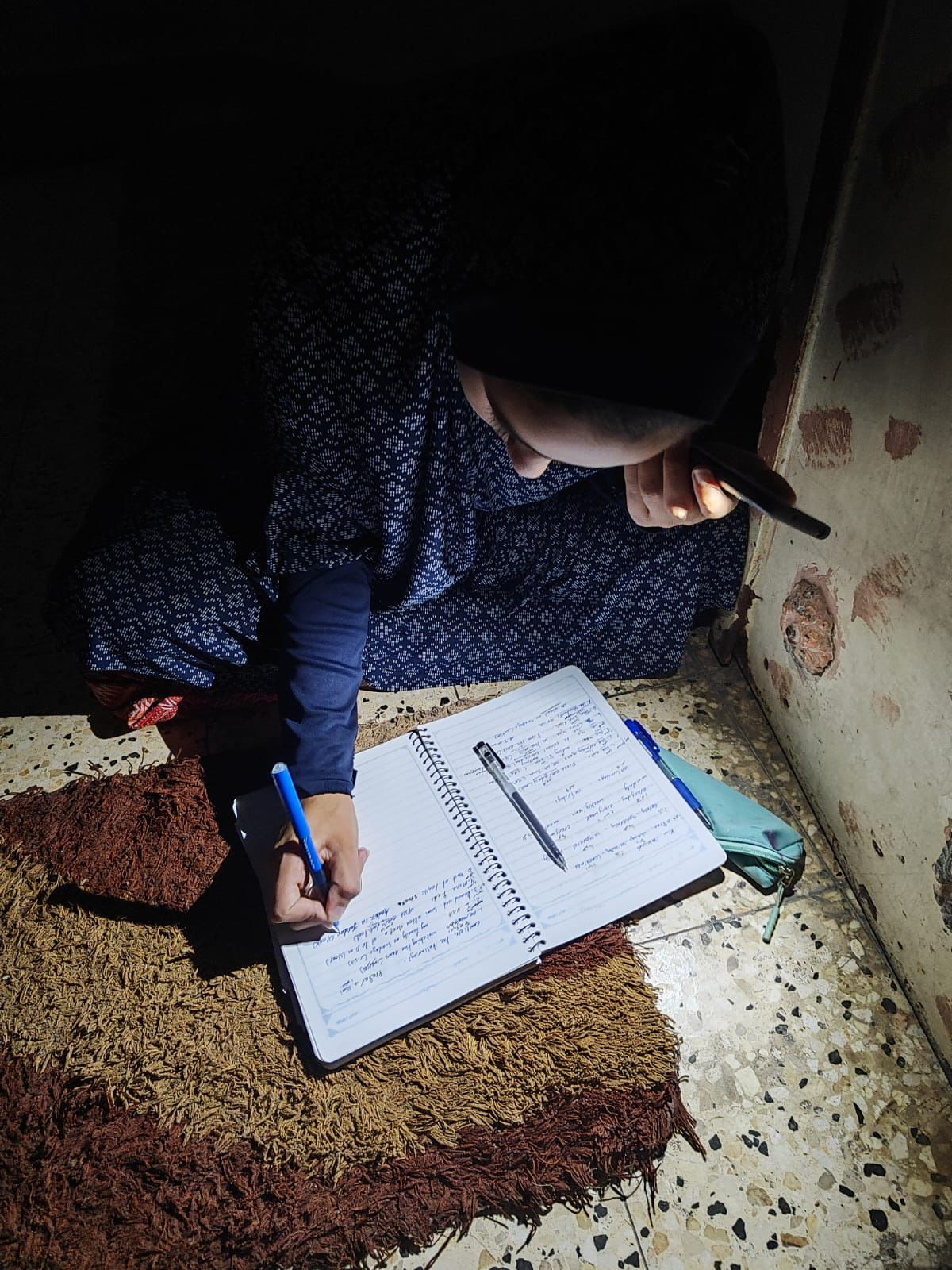


“Education is not just a privilege; it is the foundation of freedom and dignity.”

Education Under Genocide

A young girl studying amidst unimaginable challenges, demonstrating resilience and hope.


The ongoing genocide is one of the darkest chapters in human history, targeting the innocent with ruthless destruction. In the face of this horror, children are not just collateral damage—they are the primary victims, denied their basic right to live, learn, and dream. This is a call to every global citizen: we cannot look away.

Education: A Defiant Stand Against Genocide


In the shadow of genocide, education becomes a symbol of resistance. It is not merely a pathway to knowledge; it is a lifeline for survival. For children enduring the daily horrors of targeted violence, the opportunity to learn represents an unyielding hope—a chance to envision a future free from persecution.

These children, robbed of their homes, their families, and their safety, find solace and strength in classrooms, even when surrounded by destruction. Their resolve to pursue education despite the odds is a testament to the resilience of the human spirit.

Each lesson learned is an act of defiance against oppression, a step toward reclaiming their humanity. Education is not just their right—it is their resistance.

Education: Humanity’s Strongest Shield


Genocide seeks to erase not only lives but legacies—destroying the potential of future generations. Education stands as humanity’s strongest shield, ensuring the preservation of hope, identity, and the ability to rebuild. Here are stories of children and families who, despite unimaginable atrocities, hold onto education as their defiance against oppression.

Gaza (Palestine)

In Gaza, education is a revolutionary act. Under constant siege and destruction, children find solace and defiance in classrooms, often improvised in bombed-out buildings. The oppressors aim to erase their future, but every child who learns proves that resilience cannot be destroyed.

Uganda

In the shadow of atrocities committed by groups like the Lord’s Resistance Army, Uganda’s children find refuge in education. Schools provide not just literacy but the psychological healing necessary to break cycles of trauma and build peaceful communities.

Bosnia

Decades after the genocide in Srebrenica, schools in Bosnia are more than educational institutions—they are bridges between divided communities. By fostering mutual understanding through education, children are actively healing wounds and preventing future violence.

Ukraine

In Ukraine, underground schools and virtual classrooms keep education alive for children displaced by war. These efforts resist attempts to disrupt learning, proving that knowledge is a tool for resistance and rebuilding.

Syria

In refugee camps, Syrian children attend makeshift schools in tents. Education is not just a right but a shield against radicalization and a pathway to restoring stability for displaced families.

Montenegro

Montenegro’s post-war generation uses education to rebuild a sense of national identity and inclusivity. By promoting intercultural understanding, schools are planting seeds for a peaceful and unified future.

Egypt

In marginalized communities of Egypt, education combats systemic poverty and inequality. Schools empower children to dream of opportunities beyond their current struggles, fostering hope and resilience.

A Global Crisis Demands Global Action


Genocide is not just an attack on a single community—it is an assault on humanity itself. The systematic erasure of cultures, identities, and generations leaves a void that reverberates across the globe. To stand idle is to allow hate to triumph. It is our moral obligation to respond, to resist, and to rebuild.

Education is humanity’s most potent weapon against such atrocities. It equips children and communities with the tools to rebuild and empowers individuals to challenge narratives of oppression. Every educated child is a step toward dismantling cycles of hate and fostering societies that value justice and equality.

The global community must recognize that turning a blind eye to genocide today creates a precedent for future atrocities. Our voices, resources, and actions can create ripples of change, protecting the most vulnerable and holding oppressors accountable. Together, we can ensure that education is not just a right but a reality for every child, even in the darkest corners of the world.

The World Won’t Change Itself

Yasmina Ceric

Renewal Icon A New Year, A Renewed Hope for Humanity


As a humanitarian, every New Year reminds me of the extraordinary resilience of humanity. In my journey across the world, I’ve seen hunger, displacement, and heartbreak—but I’ve also witnessed courage, generosity, and the unyielding will to survive. These moments stay with me and guide the work we do, even as the challenges evolve year by year.

A Mission Rooted in Humanity

Over the years, I’ve learned that change doesn’t begin in boardrooms or headlines—it begins in the quiet moments of understanding someone’s pain, listening to their story, and believing in their potential. Whether in refugee camps, war-torn cities, or remote villages, our mission has always been clear: to restore dignity, to empower, and to create lasting change.

I’ve met children who walk miles for clean water, mothers who skip meals to feed their families, and elders who hold onto hope despite losing everything. These are the people who inspire me to continue fighting hunger, inequality, and inhumanity. They are not just statistics; they are the heart of what we do.

Turning Compassion into Action

From delivering meals in famine-stricken regions to building schools for children who’ve known only conflict, our work is driven by a simple principle: compassion without action is incomplete. Through collaboration with local communities, we ensure that every initiative is sustainable, impactful, and respectful of the people we serve.

This is not a one-way effort. The people we work with are partners in their own progress. I’ve watched women lead agricultural programs, children excel in classrooms, and entire villages rebuild after devastation. These victories remind me that when we give people the tools to thrive, they will take ownership of their futures.

Because Every Life is Worth Fighting For

I often reflect on why I chose this path. The truth is, I didn’t choose it—this work chose me. Growing up in a world scarred by war, I understood from an early age what it means to lose everything. But I also learned what it means to rebuild, to forgive, and to hope. This is why I do what I do: to honor those who didn’t have the chance to fight for their futures and to give those who still can every opportunity to succeed.

Every smile, every small victory, every life saved—these are the moments that define us. In the face of overwhelming challenges, we choose hope because hope is the foundation of every great change.

Team Icon Join Me in Making a Difference

As we enter this new year, I invite you to stand with me. Together, we can break cycles of despair, empower those in need, and build a world rooted in justice, dignity, and hope. Your voice and your actions have the power to inspire change that lasts.

Genocide and Its Impact on Humanity

Yasmina's Photo

Heart Icon The Process of Genocide and Its Impact on Humanity
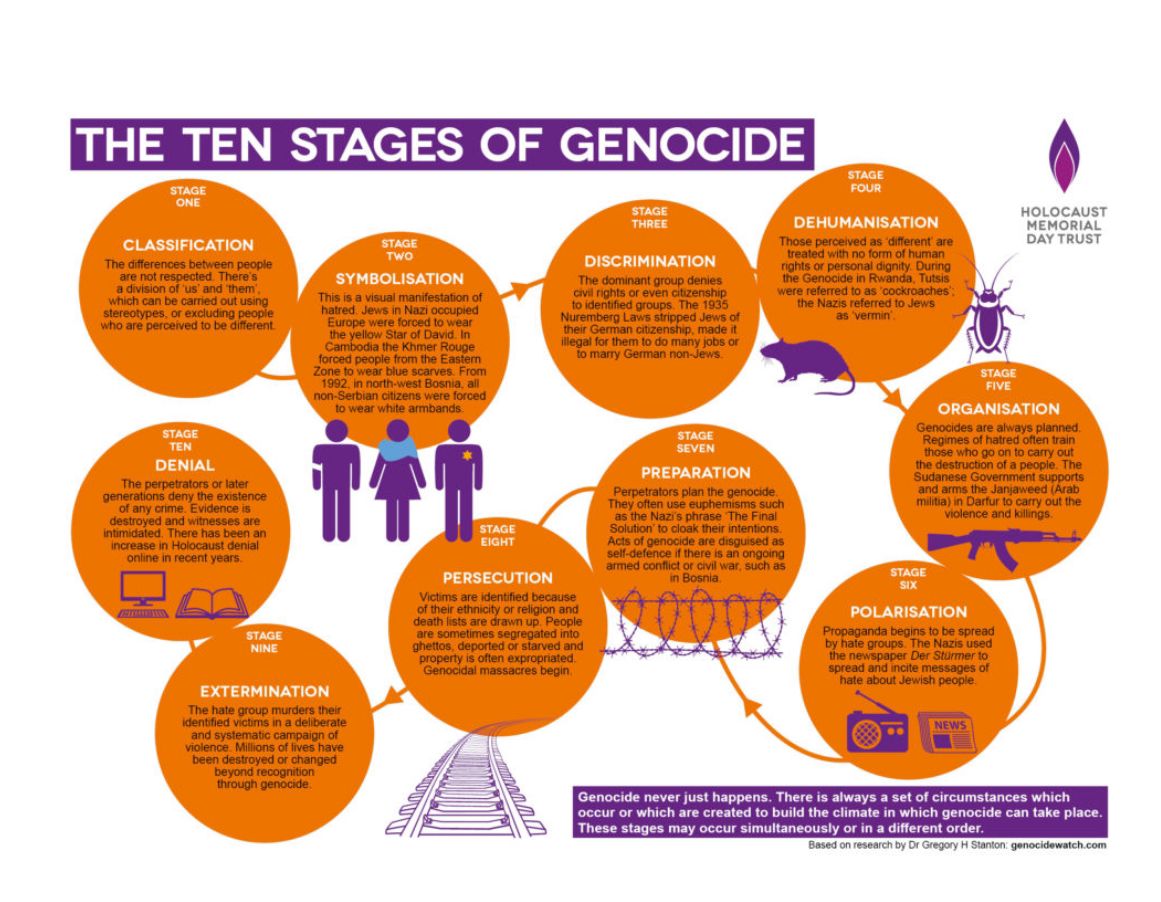

Genocide is humanity’s darkest failure. It is a calculated process designed to erase entire groups of people—not just from the land, but from memory. Yet, genocide doesn’t begin with mass killings. It begins with whispers, labels, and policies that sow division and dehumanization. By the time the world reacts, it is often too late for countless lives.

As someone who has witnessed war, brutality, and genocide’s devastating impact, the loss of family members. I know that understanding genocide is not just about remembering the past—it is about recognizing its warning signs today. From the Holocaust to Rwanda, from Bosnia to Palestine, the patterns are clear. Genocide thrives in silence, complicity, and the normalization of hate.

Genocide: A Process of Destruction

Genocide unfolds in deliberate steps, each one eroding the humanity of its victims while normalizing violence within society. It begins with dividing people into “us” and “them” and ends with mass killings and denial. This process is systematic and deliberate, fueled by propaganda, laws, and policies that institutionalize hate.

Genocide Against Humanity

Click the image to view it in full size.

In Bosnia the centuries old dehumanization of Bosniaks ( Muslims) , as the less than, and serb superiority as the “chosen heavenly people”, along with the underground campaigns within the former Yugoslavian government to overtake the army for years, ensured that the genocide of the Bosniaks would be organized and ready as soon as Bosnia declared independent from Yugoslavia in 1992. These aren’t isolated tragedies—they are echoes of a broader pattern that persists today.

Genocide in Plain Sight: The Tragedy of Palestine

In Palestine, an entire population is being systematically erased under the guise of “security” and “conflict.” Children are imprisoned, entire families are displaced, and civilians are subjected to collective punishment. The bombing of schools, the destruction of homes, and the targeting of healthcare facilities are not acts of war—they are atrocities designed to terrorize and break the will of a people.

Over 75 years of illegal occupation have left Palestinians with little more than despair. Restrictions on movement, access to basic necessities like water and medicine, and the demolition of entire neighborhoods reflect a broader strategy of erasure. Yet, despite the daily horrors, Palestinians resist—not just with protests, but by holding onto their culture, their identity, and their humanity.

Justice Icon Join the Fight for Justice

The fight against genocide begins with action. Educate yourself about the ongoing atrocities in Palestine and around the world. Support organizations on the frontlines of justice and relief. Share stories that demand to be heard. Together, we can break the cycle of violence and build a future of dignity, justice, and peace for all.

Email your representative and ask them to stop supporting a foreign entity , stop sending weapons to a foreign country and ask for a full ceasefire in Palestine. Together, we can make a difference. Your voice matters—your actions can change the world.

Supporting Displaced Children: The Vital Role of Mental Health

Yasmina's Photo

Heart Icon Displacement is More Than Loss


Displacement is not just the loss of homes or schools—it is the shattering of childhood itself. For millions of children, the horror of war doesn’t end when the bombs stop raining down or when they cross borders in search of safety. The devastation lingers, embedding itself in their days, their dreams, and their very sense of self. Especially how the term “conflict” is deemed when actually what’s happening is genocide and some of the most barbaric actions man has ever taken against a child. From torture, to humiliation, from starvation, to emotional and physical scarring. Take that and add that children often lose their parents, siblings, limbs, their will.

What’s often ignored in conversations about war and displacement is the profound mental and emotional toll it takes on these young lives. Beyond the headlines and the images of destruction lies a silent epidemic of pain—children grappling with the aftermath of terror, the loss of everything they once held dear, and the gnawing fear that their world will never be whole again.

For these children, safety is no longer a given; it becomes an unattainable mirage. The sounds of explosions echo in their memories long after the skies clear. The absence of a parent, a sibling, or a friend who didn’t survive becomes a constant ache. And the question they carry—Why did this happen to us?—remains unanswered. These are not fleeting emotions. They are wounds that deepen with time if ignored, scars that shape their futures. The obliteration of their homes and communities is not the end of the story—it’s just the beginning of a darker, more insidious tragedy. The loss of identity, the erosion of trust, the haunting isolation—this is what war leaves behind in the minds of children. And yet, these are the very stories the world rarely hears.

So much of the global response focuses on basic survival: food, water, and shelter. While these are vital, they fail to address the deeper, more complex crisis—one that unfolds within these children’s hearts and minds. A child who has lost everything but is fed is still a child haunted by nightmares. A child given shelter but no emotional support remains trapped in the ruins of their own psyche. And yet, even amid such devastation, there is a resilience that refuses to be extinguished. These children, who have endured more than most adults can fathom, still hold onto glimmers of hope. They dream, they smile, they cling to the possibility of a better tomorrow. Their resilience is astonishing, but it should not be mistaken as a solution to their suffering. It is not their burden alone to carry. We must do better by them. The shattered minds and hearts of these children deserve the same urgency and care as their physical needs. Addressing their trauma is not secondary—it is essential. Every child deserves more than just survival; they deserve the chance to feel safe, to reclaim their joy, and to imagine a future unburdened by the horrors they’ve witnessed. War doesn’t just destroy buildings—it destroys childhoods. It leaves scars far deeper than those seen on the surface, and it is our responsibility to acknowledge them. These children are not just victims of tragedy—they are survivors who deserve our recognition, our understanding, and, most importantly, our respect. Their pain is a testament to the brutality of war, and their resilience is a reminder of what is possible when we refuse to look away.

A Silent Crisis: The Mental Health Toll

Imagine a child who once felt safe in their neighborhood, now grappling with memories of violence they shouldn’t have witnessed. Imagine their confusion as they try to make sense of a world that seems to have abandoned them. Displacement doesn’t just disrupt—it fractures. It leaves gaps where a sense of security, belonging, and normalcy once resided. For children, these aren’t small losses; they are monumental.

The mental health disaster among displaced children is a global issue that demands more attention, especially for those who have endured barbaric and genocidal acts. For these children, emotional well-being often takes a backseat to immediate survival needs like food and shelter. But trauma doesn’t wait. It burrows deep, manifesting in ways that ripple across a lifetime.

Children who have witnessed or been subjected to atrocities face profound psychological wounds. This trauma impacts their ability to learn, to connect with others, and to rebuild their lives. It influences their sense of identity, their capacity to trust, and how they perceive the world around them. Unchecked, this emotional devastation perpetuates cycles of pain, affecting not only the individual but entire communities and future generations. Addressing this issue requires urgent, systemic interventions that prioritize mental health alongside physical needs. These children deserve the opportunity to heal, to feel safe, and to reclaim their futures.

Why Mental Health Cannot Be an Afterthought

What strikes me most in this conversation is how mental health is treated as an afterthought in many crisis responses. Yes, the logistics of displacement—where to live, how to eat—are critical. But we cannot afford to separate those practical concerns from the emotional devastation that accompanies them. Addressing the psychological impact is not optional; it is a core part of helping children rebuild their lives.

For me, the solution lies in recognizing the humanity behind every statistic. It’s about looking beyond the headlines and seeing the individual stories of resilience, fear, and hope. Children who have endured more than many of us can imagine still find ways to dream. They remind us that even in the most broken systems, there is strength waiting to emerge.

Helping Hand Icon How You Can Help

Mental health support for displaced children isn’t charity—it’s justice. It’s acknowledging their right to heal, to grow, and to be whole. Let’s bring this conversation out of the shadows and give it the attention it deserves.

Donate Icon

Donate

Your contributions fund counseling sessions, therapy programs, and safe spaces for children in need.

Donate Now

Aid to Vulnerable Children

Yasmina's Photo

Heart Icon Health is Hope


Welcome to The Children’s Future, a space where stories of resilience and the impact of compassion come to life. I’m Yasmina, the founder of this mission, and I’ve dedicated my life to providing hope and healthcare to children who need it most. In this post, I want to take you on a journey through the struggles, courage, and dreams of the children we serve—and show you how together, we can rewrite their stories.

Heart Icon Health is Hope: Providing Essential Medical Aid to Vulnerable Children


As I sit down to write this, I can’t help but reflect on the countless children I’ve met who face unimaginable struggles every single day. Their faces, their voices, and their resilience linger in my mind, urging me to do more. From remote villages where the nearest healthcare facility is a day’s journey away to overcrowded refugee camps where families share heartbreaking stories of loss, I’ve seen firsthand what it means to live without basic medical care—and the impact it has on young lives.

These children are not just statistics. They are daughters and sons, dreamers and believers. They are the artists, teachers, and leaders of tomorrow. Yet, without access to something as fundamental as healthcare, their futures are being stolen before they even have a chance to begin.

At The Children’s Future Foundation, we don’t just see children in need; we see potential waiting to be unleashed. We believe that health is more than a necessity. It is a cornerstone of hope, the foundation of every dream, and the first step toward a brighter, more equitable world. When a child receives lifesaving medicine, when they feel the relief of a doctor’s healing touch, and when their parents are empowered with knowledge to keep them safe, we are not just improving their health—we are rewriting their story.

I recently met a young boy in a rural village who had been suffering from untreated infections for years. With the help of our dedicated medical team and your support, we were able to provide the care he needed. Now, he can run, play, and go to school like every child should. His gratitude and newfound energy are a testament to what we can achieve together.

There are thousands of children like him who need us. Their stories are waiting to be rewritten. With every donation, every shared moment of your time, and every ounce of your support, we can reach one more child. We can bring hope to one more family. We can light up one more future.

So I’m asking you—not as someone writing to you from an organization, but as someone who has stood beside these children and seen their courage. Will you stand with them too? Will you be the reason a child gets a second chance at life, at laughter, at a future?

Together, we can transform lives. Together, we can ensure that every child has the opportunity to dream, to grow, and to thrive. Please join us. Donate today. Volunteer your time. Share our mission with your friends and family. Because no child should have to wait another day for hope.

Helping Hand Icon How You Can Help

The challenges are great, but so is our ability to create change. Whether you donate, volunteer, or advocate, your actions bring hope to children who need it most.

Donate Icon

Donate

Your generosity funds life-saving healthcare and nutrition programs for children in need.

Donate Now
Volunteer Icon

Volunteer

Use your skills and compassion to deliver life-saving care to vulnerable communities.

Volunteer Now

The Struggles Children Face Today

Heart Icon A World of Challenges: The Struggles Children Face Today


Around the globe, millions of children wake up each day to face unimaginable challenges. From lacking access to basic education and healthcare to struggling with hunger and displacement, the hurdles they encounter are daunting. At The Children’s Future, our mission is to shine a light on these global struggles while working toward creating brighter tomorrows for children in need.

The Challenges Children Face Globally

Education Icon

Access to Education

Over 244 million children worldwide are out of school due to poverty, gender inequality, and conflict (UNICEF). Education is the cornerstone of a better future, yet so many children remain deprived of this basic right.

Hunger Icon

Hunger and Malnutrition

Malnutrition affects 45 million children under the age of five, leaving many without the energy to grow and thrive (UNICEF). Hunger doesn’t just take away strength—it takes away hope.

Healthcare Icon

Healthcare Inequality

Thousands of children die every day from preventable diseases like pneumonia and malaria due to lack of access to basic healthcare (World Health Organization). Simple solutions like vaccines and clean water can save countless lives.

How You Can Help

The challenges are great, but so is the power of collective action. Here’s how you can join our mission:

  • Donate: Your contribution helps fund education, healthcare, and essential resources.
  • Volunteer: Share your time and skills to support children and families.
  • Advocate: Spread awareness about the struggles children face and inspire others to act.

The Children’s Future

All Children are OUR children!

Skip to content ↓